Executive Summary: 2026 App Cost Benchmarks
- Lean MVP Launch: $2,499 – $6,000 (4–6 weeks, core workflow, single-codebase iOS + Android).
- Growth-Stage App: $6,000 – $18,000 (8–12 weeks, custom animations, social logins, payment gateway, cloud backend).
- Complex Multi-Platform Ecosystem: $20,000 – $50,000+ (custom AI engines, offline sync, enterprise RBAC, live streaming).
- The Single-Codebase Advantage: Modern cross-platform frameworks (Flutter / React Native) cut overall engineering overhead by 35% to 45% compared to building separate native Swift and Kotlin apps.
"How much will my app cost?" is the very first question every founder, CTO, and enterprise product lead asks. Yet most software agencies respond with frustrating ambiguity: "It depends." While every project is unique, development costs are not random—they are governed by clear engineering variables: screen counts, architectural complexity, offline requirements, and third-party integrations.
1. The 3 Primary Tiers of App Development in 2026
To understand where your budget will land, it helps to categorize your digital product into one of three distinct maturity stages:
| Tier | Typical Cost | Timeline | Core Deliverables |
|---|---|---|---|
| Tier 1: Lean MVP | $2,499 – $6,000 | 4 – 6 Weeks | 5–10 Core Screens, Auth, Basic Cloud DB, App Store submission guarantee. |
| Tier 2: Growth App | $6,000 – $18,000 | 8 – 12 Weeks | 15–25 Screens, Stripe/In-App Purchases, Push Alerts, Analytics, Admin Panel. |
| Tier 3: Enterprise / AI | $20,000 – $50,000+ | 3 – 6 Months | Offline SQLite sync, Custom LLM/AI APIs, HIPAA/GDPR hardening, Microservices. |
2. Key Cost Drivers: Where Does the Money Actually Go?
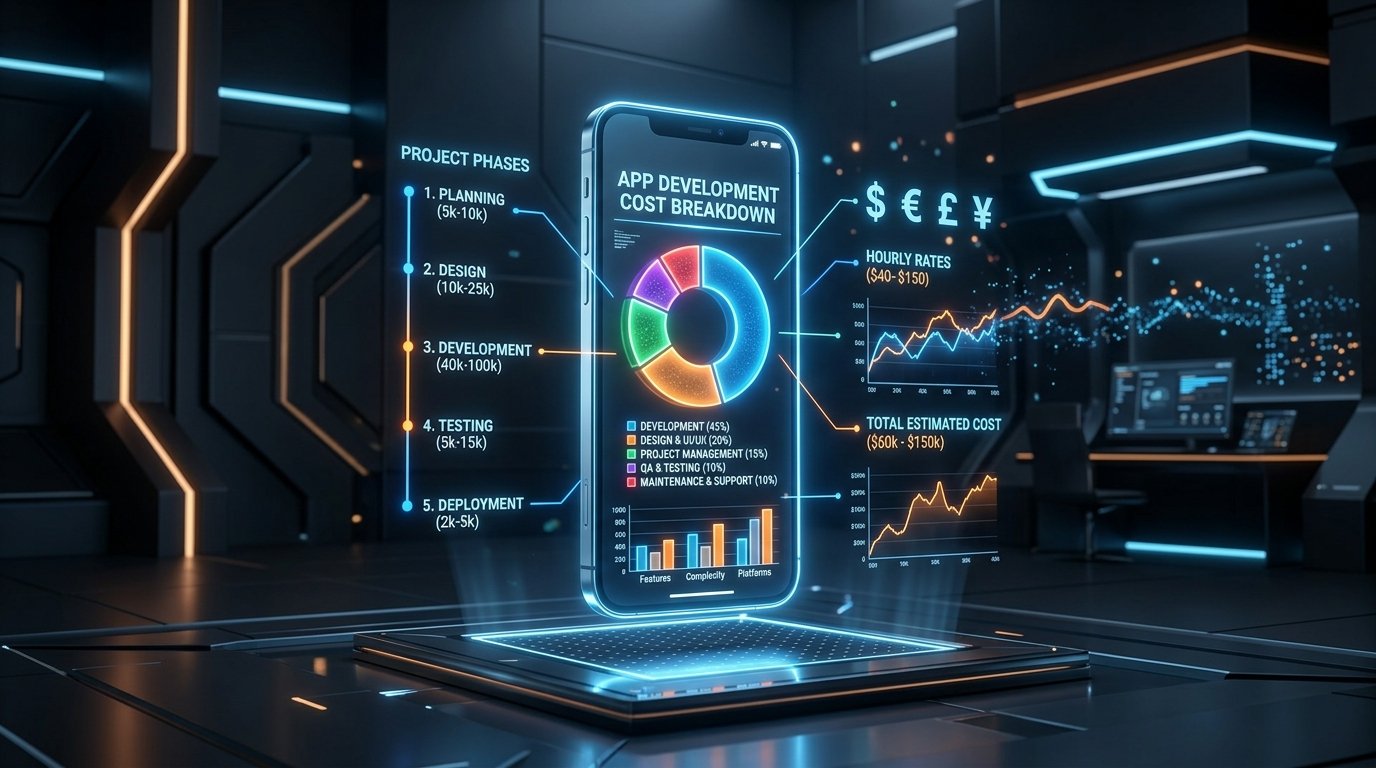
When an engineering studio quotes your app, development budget is allocated across five essential disciplines:
- UI/UX Design & Clickable Prototyping (15–20%): User journeys, interactive Figma prototypes, dynamic micro-interactions, and design system tokens. Skipping this phase always leads to costly code rewrites later.
- Frontend Mobile Engineering (40–45%): Translating designs into responsive, 60fps native screens, managing local application state, and ensuring smooth transitions on both iOS and Android devices.
- Backend Architecture & APIs (20–25%): PostgreSQL/Supabase database design, cloud functions, authentication, role-based access control (RBAC), and third-party webhooks.
- Quality Assurance & Device Testing (10%): Testing on physical iPhones, Google Pixels, Samsung devices, and tablets to eradicate layout regressions and memory leaks.
- App Store & Google Play Launch (5%): Apple developer signing, privacy manifest declarations, Play Console policy compliance, and handling reviewer correspondence.
"The most expensive line of code is the one you wrote for a feature nobody wanted. Building a disciplined, 5-to-10 screen MVP first is the single most effective way to protect your capital."
3. The Single-Codebase Advantage: Saving 40% Right Out of the Gate
In the early 2010s, building for both platforms required hiring two completely separate teams: one team writing Swift/Objective-C in Xcode, and another writing Kotlin/Java in Android Studio. That meant paying for two distinct codebases, two QA cycles, and double the bug fixes.
At Firebrick Studio, we leverage single-codebase architectures (Flutter / React Native). A unified codebase delivers genuine native 60fps performance while reducing development costs and ongoing maintenance by approximately 40%. When you need to update business logic or add a new feature, you write the code once, test it once, and ship it to both stores simultaneously.
Want an Exact Fixed-Price Estimate for Your App?
Use our interactive pricing calculator or schedule a 15-minute engineering roadmap session. We respond within 24 hours with a transparent milestone plan.
4. Watch Out for Hidden Costs (What Most Agencies Won't Tell You)
When planning your overall budget, make sure to account for third-party infrastructure and maintenance expenses:
- Apple Developer Account: $99/year directly to Apple.
- Google Play Developer Account: $25 one-time registration fee.
- Cloud Database & Auth: Free tier covers initial 5,000–50,000 users on Firebase/Supabase, scaling to $25–$100/month as active user count climbs.
- App Store Commissions: 15% on digital goods under the Apple/Google Small Business Program (applies if annual app revenue is under $1M).
- Ongoing Maintenance: Budget 15–20% of your initial build cost annually for OS updates (e.g. iOS 20, Android 17), security patches, and library dependencies.
Conclusion: How to Get Started Without Overspending
The smartest founders don't start by building a $50,000 mega-app. They build an ultra-focused MVP that does one single job exceptionally well, launch it to the App Store in 4 to 6 weeks, gather real analytics and user feedback, and then reinvest based on verified customer demand.
At Firebrick Studio, we specialize in exactly this lean, high-velocity model. Every client receives 100% intellectual property ownership, zero vendor lock-in, and guaranteed App Store deployment.